
Bookkeeping
October 24, 20267 min read
No license is needed for bookkeeping, but some titles are restricted. Certifications, insurance, pricing, tools and a 90-day plan, following one new practice.

Bookkeeping
October 24, 20266 min read
Everything to collect from a new bookkeeping client, how to ask so it comes back, and the setup that makes every month after the first one faster.

Bookkeeping
October 24, 20268 min read
Seven steps from asking for the month's files to sending the client their report, and what to set up in month one so month two is faster.

Bookkeeping
October 24, 20266 min read
$250 to $499 a month was the most common fee in a 2025 survey of 219 US firms. How to price from a client's hours, how many clients you can take, and what automating does to your rate.

Bookkeeping
October 24, 20265 min read
List prices, partner programs, discounts and the day-to-day differences, and why the client's existing ledger usually decides it.

Small business
October 24, 20266 min read
Group your bank and card statements by payee, by category and by how often, then compare months. With a 20-minute monthly version for owners.

Small business
October 24, 20266 min read
Start from your statements, check they're complete, categorize by the Schedule C lines with rules, match the receipts that matter, and keep what the IRS asks for.

Small business
October 24, 20265 min read
Twelve months of statements, grouped by payee and schedule: what each charge costs a year, who uses it, and when it renews. And where click-to-cancel stands in 2026.

Small business
October 24, 20266 min read
A profitable month with a falling bank balance, explained line by line: unpaid invoices, loan principal, owner's draws, equipment and sales tax.

Small business
October 24, 20266 min read
Every expense line on the 2025 Schedule C, the bank-statement rows that usually land on it, the ones people get wrong, and the 2026 mileage rates.

Small business
October 24, 20265 min read
Why the IRS and the courts care, how to set up the accounts, how to pay yourself, and how to sort out the months when the money was mixed.

Small business
October 24, 20265 min read
The checklist for a Schedule C business: the year's P&L, every statement, 1099s received and sent, payroll, loans, mileage, and the 2027 dates.

Lending
October 24, 202611 min read
What underwriters check on business bank statements: true revenue, average daily balance, NSFs, stacked advances and tampering, with SBA's 2026 rule.

Bookkeeping
October 24, 202610 min read
Bank feeds reach back 90 days to 24 months; banks keep PDFs for 7 years. How to bring the months before the feed into QuickBooks or Xero, checked.

Insurance agencies
October 23, 20267 min read
ACA cancellations rose after the enhanced credits expired. How chargebacks reach an agency, where they hide, and a monthly check that finds them.

Insurance agencies
October 23, 20266 min read
Ivans' 2026 survey of 702 agents puts automation ahead of commission. The statements that don't come by download still get keyed. How to stop.

Bookkeeping
October 23, 20267 min read
A February 2026 survey of 261 firms: most still close in spreadsheets and checklists. What an exceptions-only close takes, and how to get there.

Bookkeeping
October 19, 20266 min read
The 1099-NEC and 1099-MISC threshold rose from $600 to $2,000 for payments made in 2026. What changed, what didn't, which year each figure applies to, and how to check a client's payees again.

Bookkeeping
October 19, 20267 min read
Contractors, landlords, lawyers, clinics, corporations, card payments and goods: which payee gets which 1099 and box, the two corporations that still get one, and how to read the W-9 to decide.

Bookkeeping
October 19, 20266 min read
When to ask for a W-9, what to check on one before you rely on it, what happens without a TIN, and how to ask a client for every missing W-9 at once and have each one fill in the payee's details.

Bookkeeping
October 11, 20266 min read
Why collecting statements takes so long, what a request a client can act on looks like, and how to send one link they upload through, with nothing read until you have looked.

Bookkeeping
October 11, 20267 min read
What a complete year of bank statements means, the three ways one goes wrong, and how to see every account by every month and ask for the gaps.

Bookkeeping
October 11, 20268 min read
Why the bank and the books disagree at period end, how a bank reconciliation brings both to one figure, and how to match and post what's left.

Bookkeeping
October 11, 20267 min read
The review tests a year-end needs, run over a client's bank statements: cutoff, transfers and exceptions, a sample that can be drawn again, and a sign-off that takes two people.

Bookkeeping
October 11, 20266 min read
Four checks that catch a missed row, a doubled one, a misread figure or the wrong account, what each one proves and doesn't, and how to read them on a statement.

Bookkeeping
Updated October 20, 20268 min read
What a supplier statement shows, why its balance and yours disagree, how to reconcile one step by step, and how to have the matching done for you.

Bookkeeping
October 5, 20267 min read
What a credit note is, how it differs from a debit note and a refund, what it does to your books and tax, and how to record one in QuickBooks or Xero.

Bookkeeping
October 4, 20268 min read
Why receipts go missing between the till and the books, why each one matters at tax time, five habits that keep them under control, and how to capture them from your phone.

Bookkeeping
October 4, 20267 min read
How long the IRS, HMRC, the CRA and the ATO ask businesses to keep receipts and invoices, when a scan or photo can replace the paper, and what makes a digital copy good enough.

Bookkeeping
October 4, 20267 min read
When a supplier invoice is a bill and a receipt is an expense, why it matters for payables and double counting, what QuickBooks, Xero, Zoho Books and Sage call each, and the cases that trip people up.

Integrations
October 4, 20267 min read
The QuickBooks app, the receipt email address, attaching by hand, or a capture tool that creates the bill: what each one leaves for you to do, and which suits a bookkeeper with many clients.

Integrations
October 4, 20267 min read
Email to Bills, Xero's own document capture (Hubdoc), a CSV import, or draft bills sent by a capture tool: what each one reads, what it leaves for you, and how to run it across many Xero clients.

Bookkeeping
October 4, 20267 min read
Why duplicate invoices happen, what QuickBooks' and Xero's duplicate checks catch and miss, and how to stop a copy before it becomes a second bill.

Bookkeeping
October 4, 20265 min read
Default accounts on vendors in QuickBooks and contacts in Xero, and how Bankflow learns each supplier's account from your last send, so a client's bills are coded once.

Integrations
October 4, 20266 min read
Zoho Books' own statement import and autoscan, and how to send a PDF statement's lines straight into a Zoho bank account and each invoice in as a bill.

Integrations
Updated October 4, 20268 min read
How Bankflow turns a supplier invoice into a bill and a receipt into an expense in your accounting software, with the original attached: what each ledger receives, how tax and currency are handled, and what it deliberately does not do.

Comparisons
Updated October 17, 202611 min read
Dext, AutoEntry, Hubdoc, Datamolino, DocuClipper, QuickBooks and Bankflow compared on price per page, bank statements and what ten clients cost.

AI & Automation
September 20, 202610 min read
Ask answers questions about the statements on your account in figures and charts, with every number copied out of a tool result and linked to its rows.

AI & Automation
May 1, 20266 min read
Learn how AI-powered tools extract, categorize, and analyze transactions from PDF bank statements, and what to review before using the results.
Bookkeeping
September 15, 20268 min read
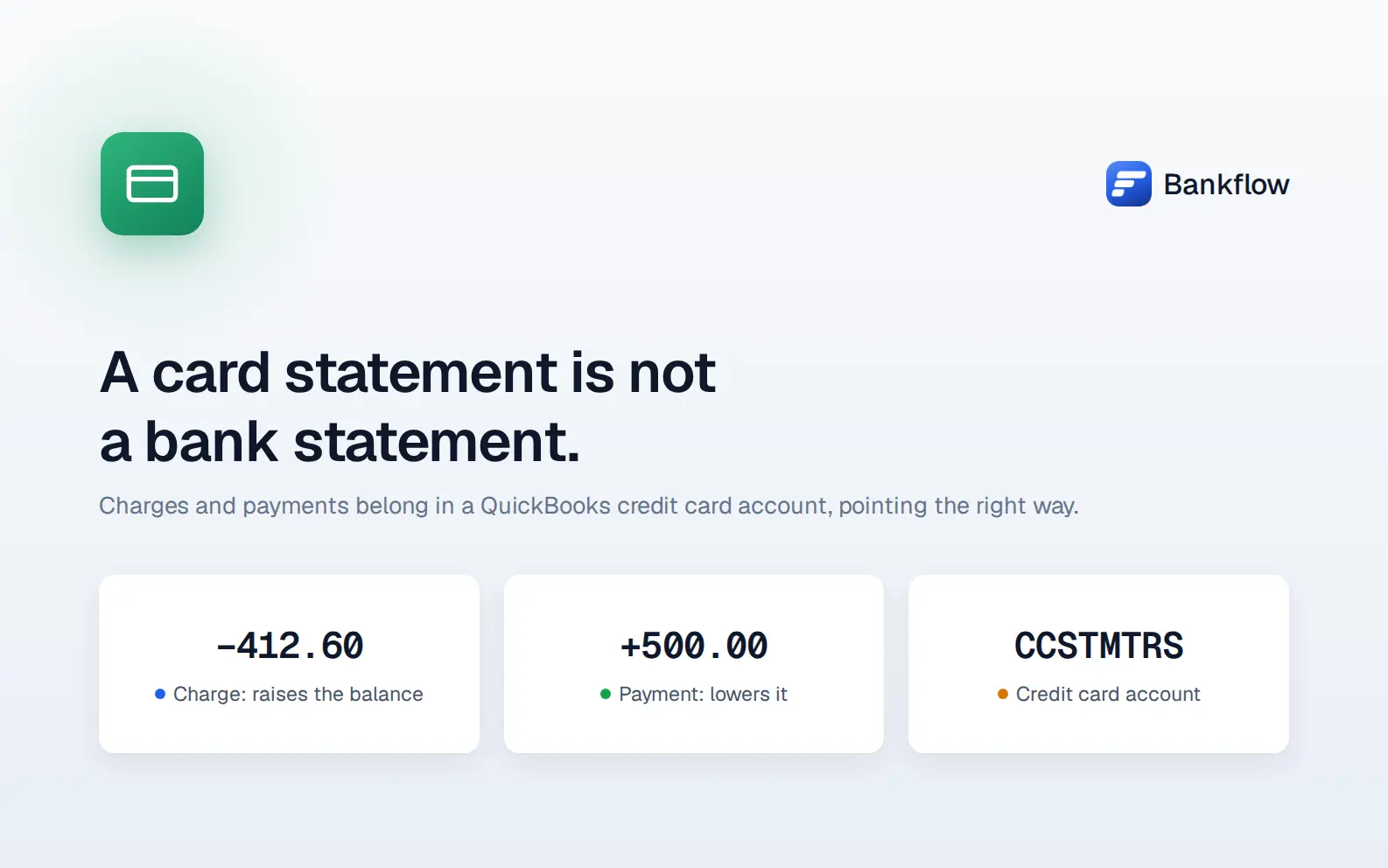
Get a credit card statement into a QuickBooks credit card account, not a bank register: the file shape, which way the amounts point, and the payment row.
Bookkeeping
Updated September 18, 20267 min read
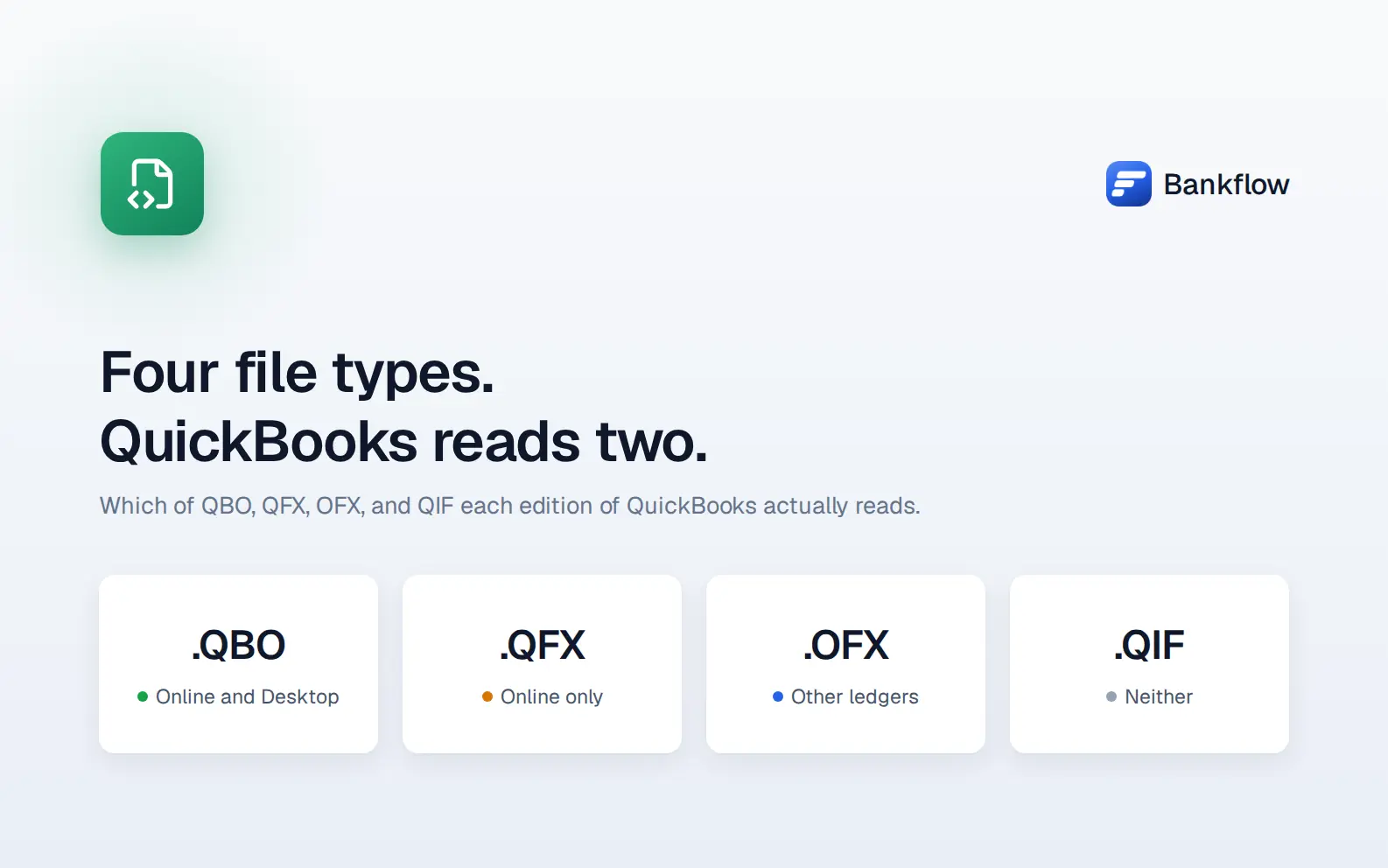
What QBO, QFX, OFX, and QIF files are, which ones QuickBooks Online and Desktop import, and how to turn a PDF statement into the right one.
Integrations
September 10, 20267 min read
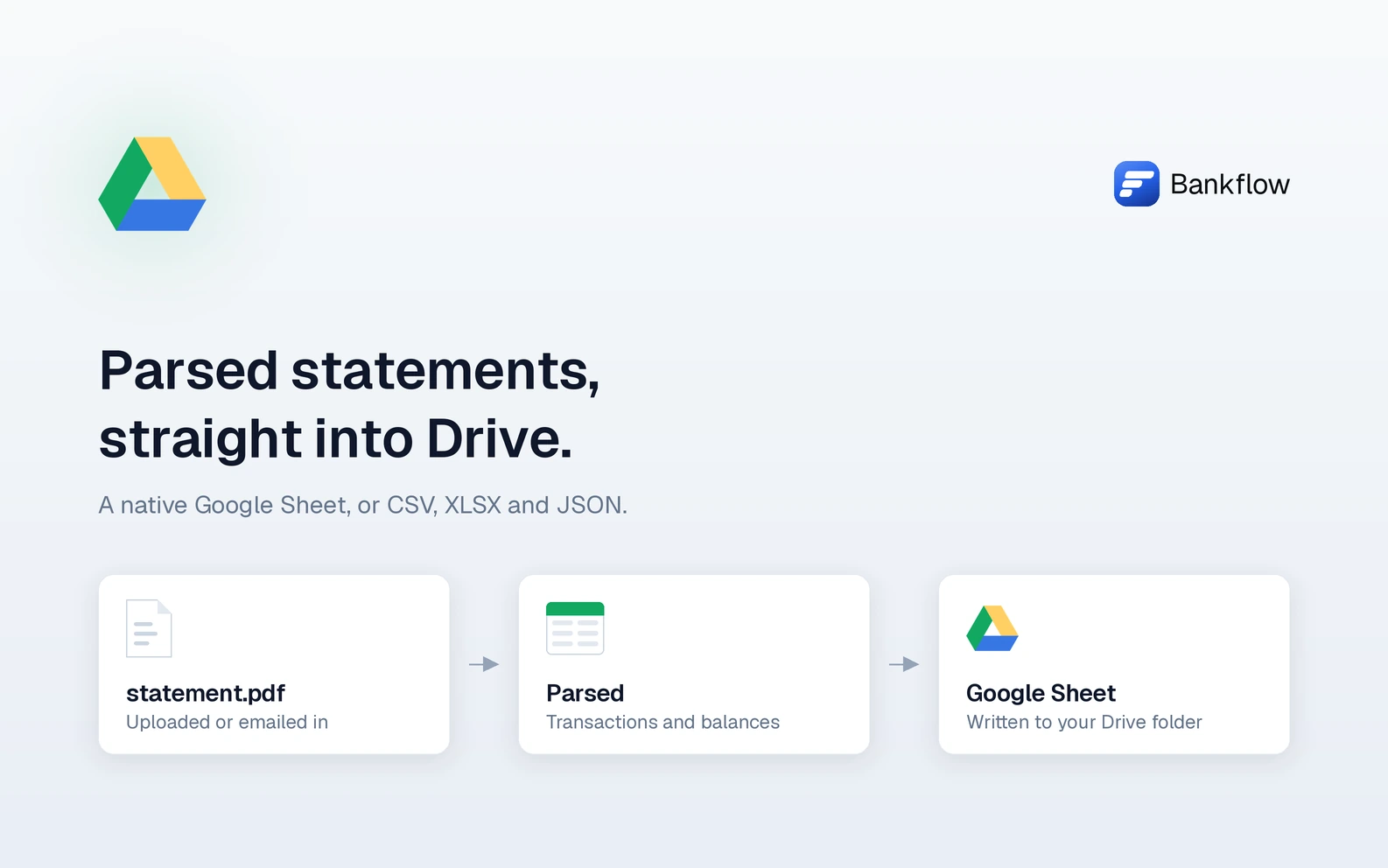
Send parsed transactions straight into a Drive folder as a Google Sheet, CSV, XLSX, or JSON, and understand why Drive works as a destination rather than a source.
Integrations
September 9, 20267 min read
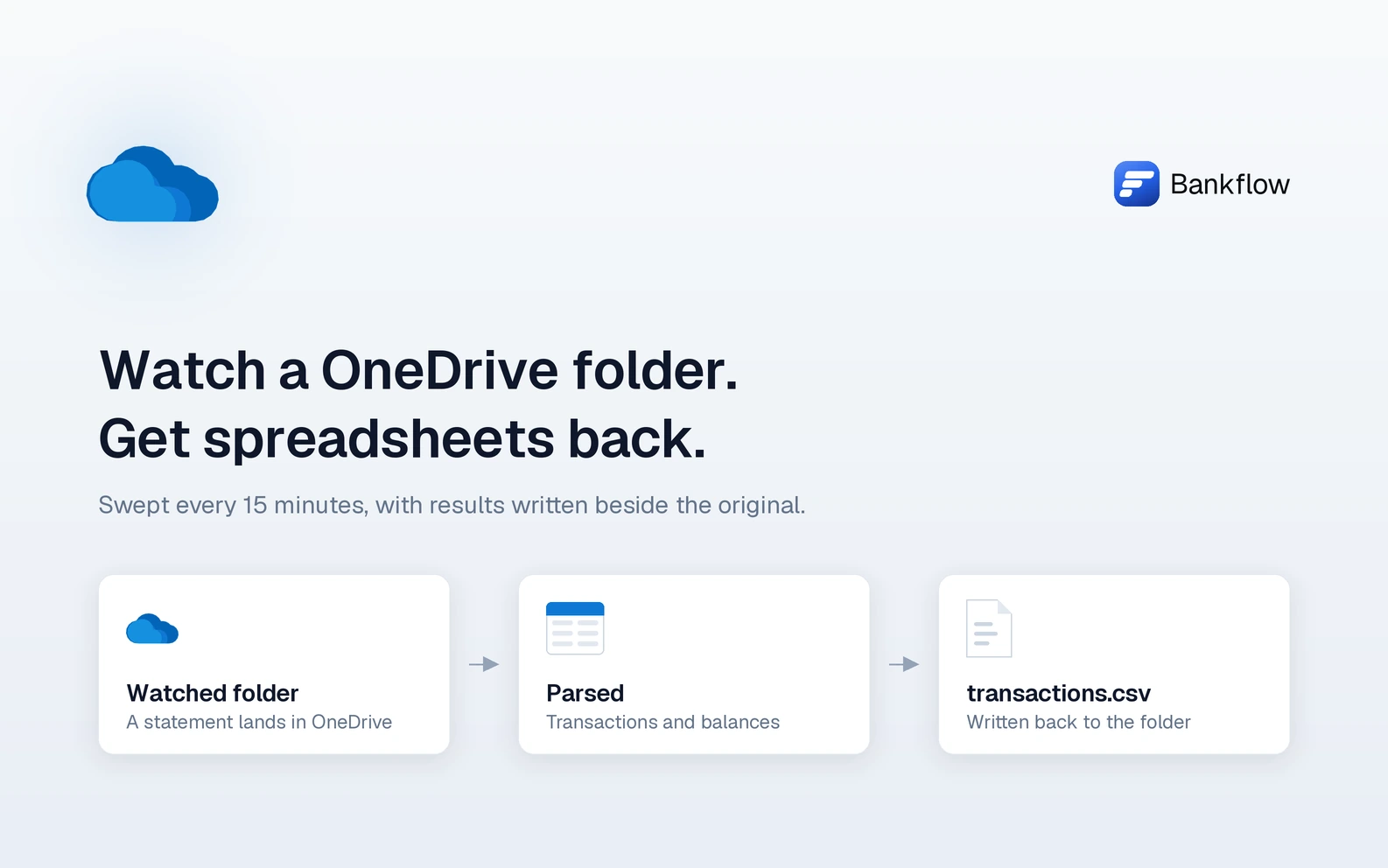
Watch a OneDrive folder for new statement PDFs, parse them without lifting a finger, and write the transactions back beside the file they came from.
Integrations
September 8, 20266 min read
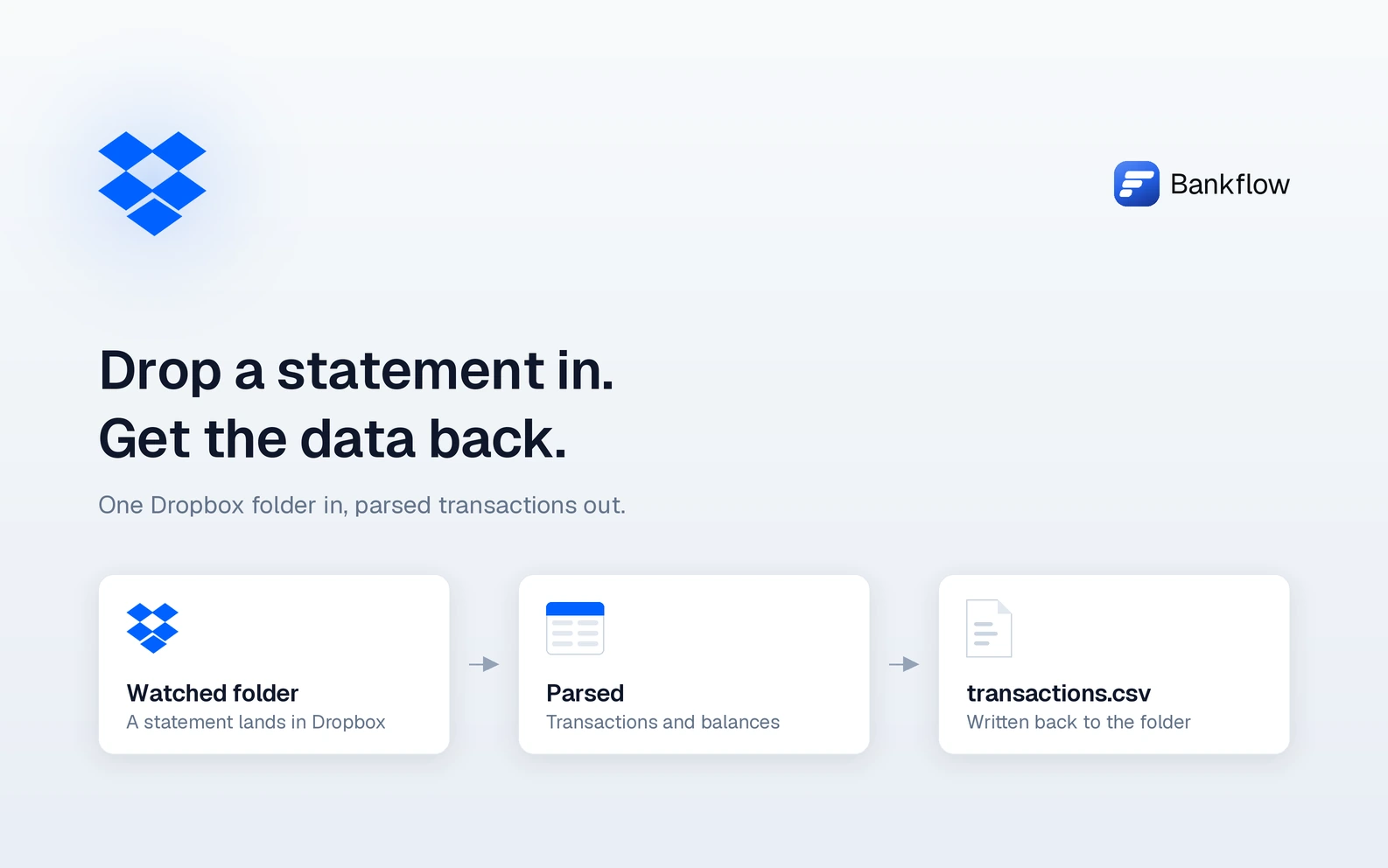
Point a workflow at a Dropbox folder and every statement that lands there is parsed, categorized, and written back as a spreadsheet.

Comparisons
Updated September 16, 202614 min read
Ten bank statement analysis tools scored on workflow, accounting formats, automation, and published pricing, with what each one's free tier really gives you.

Bookkeeping
April 22, 20265 min read
A practical workflow for turning raw bank statements into reviewable, reconciliation-ready bookkeeping data.

Cashflow
April 15, 20267 min read
Learn how to calculate operating cashflow, find recurring pressure, and build a repeatable review process from bank-statement data.

Freelancers
April 5, 20264 min read
A monthly expense-review workflow for freelancers who need cleaner records for taxes, cashflow, and profitability.

Accounting
March 30, 20266 min read
How accounting teams can replace repetitive statement entry with a consistent extraction, review, reconciliation, and export workflow.

Startups
March 25, 20265 min read
A practical method for calculating gross burn, net burn, and runway from categorized bank-statement transactions.

AI & Automation
March 20, 20266 min read
How automated transaction categories are assigned, where mistakes happen, and why human review remains part of a reliable workflow.
